

Ashley’s Unsolicited Unpopular Opinion
(that might piss off some universities out there….)
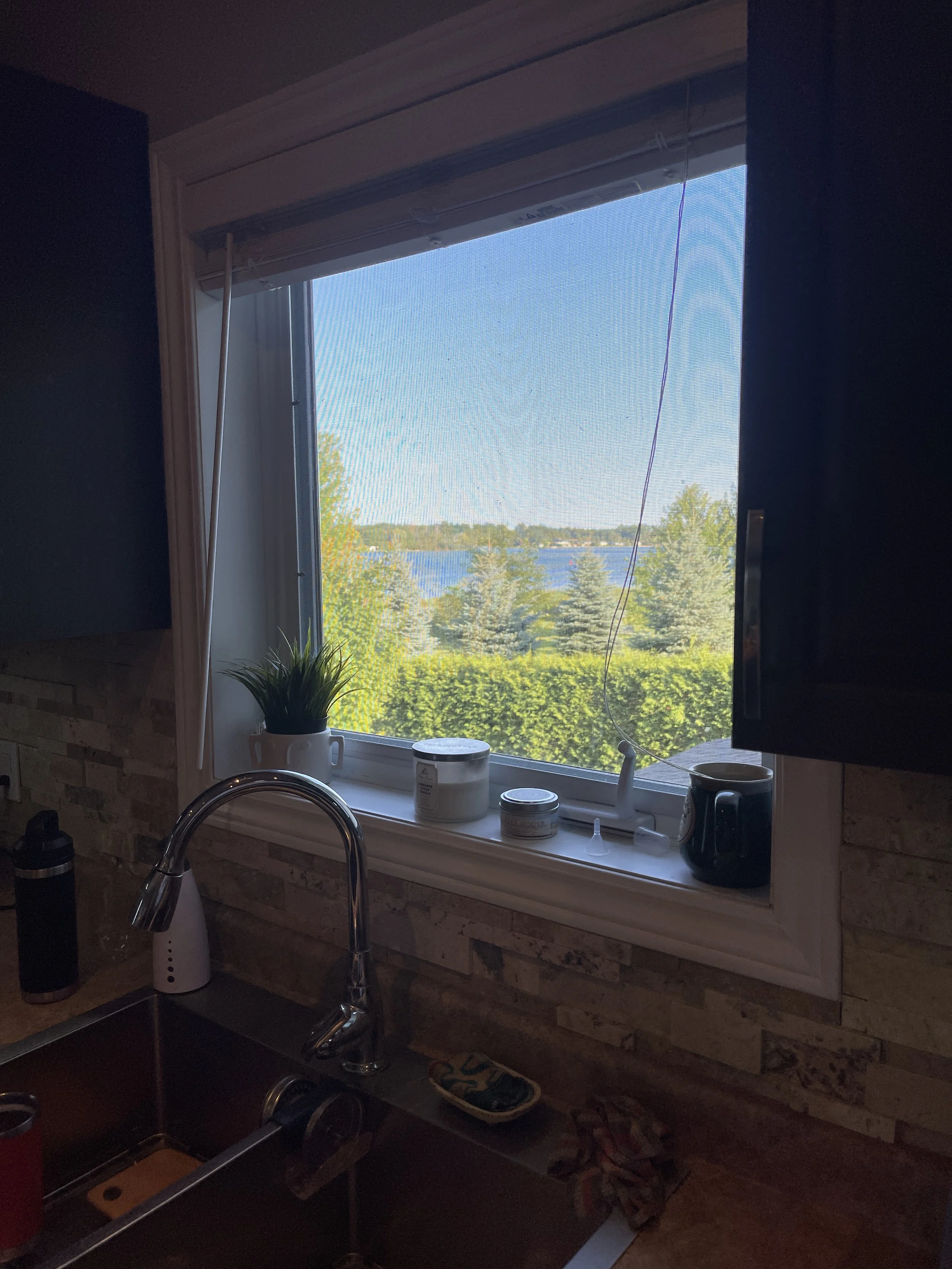
My kitchen view has taught me more about business than any classroom.
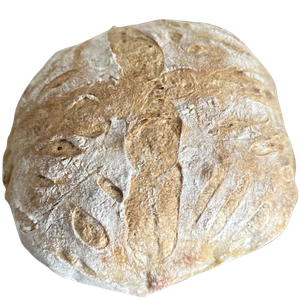
Bertha the sourdough starter on the counter. Ash trees out the window. A table I keep setting for people worth feeding.
Each one requires patience. Each one requires trust. Each one eventually gives back more than you put in.
That's why I sent you Bertha. And it's why I built this.

Small Town Roots · Big Market Impact
Ashley Little
Market Growth Strategist · New Brunswick, Canada
My name, Ashley, means meadow of ash trees. I grew up in a town of 1,261 people, a small ratio to the trees surrounding us.
I grew up with the trees. Geographically, etymologically and metaphorically.
An ash tree's Latin name is Fraxinus excelsior meaning ‘ever upward, always reaching’. But what makes the ash remarkable isn't just how high it grows. It's what its root system does underground. Ash roots are wide, deep, and competitive. They find nutrients other trees can't reach and they share them with the ecosystem around them, growing the ground it is created on with others.
As an entrepreneur, I’ve created the opportunity where I, quite literally, create self-sustaining cycles of value for people who feel small, invisible or underrepresented. That's the model I build for the companies I work with.

A note for ArleneCan I make you a loaf of what I’m cooking?
I told you I make sourdough. You said you'd be right over.
I figured: why wait for an invitation when I could just send Bertha to you instead?
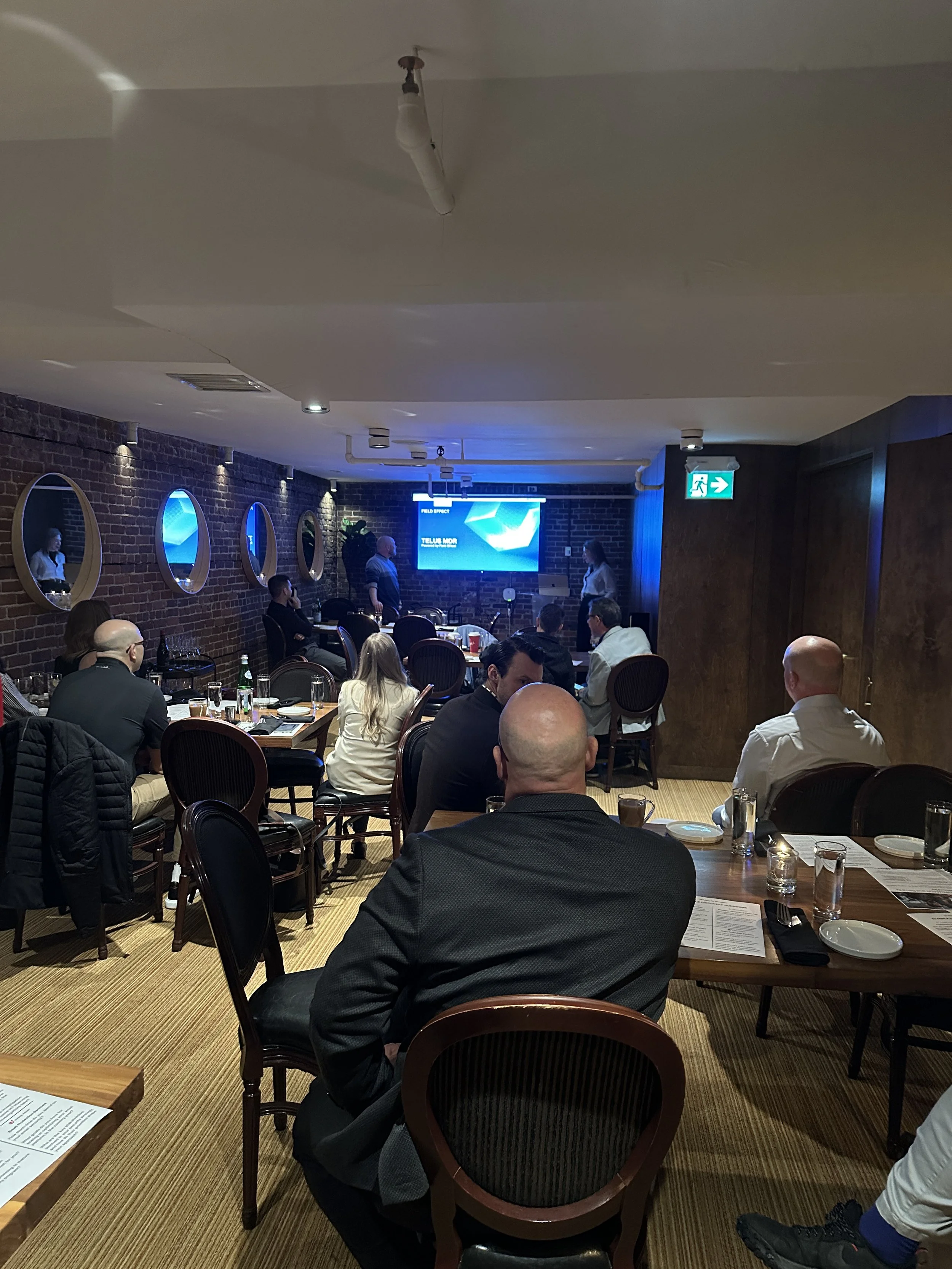
At the Southwest Business Summit, I started to tear up in the crowd because I felt I have lived a version of every word you spoke.
I am 26. I grew up in a small town. I've researched marketing, accounting, psychology, public communications and submitted a paper to JBR all before I was 22. I have built go-to-market systems for enterprise B2B technology companies from scratch, spending years building a partner marketing system inside a company that never quite understood what they had.
I have a hunch about why Canadian companies keep losing their channel partners in the bottom 20%, and I intend to figure it out. My ask to you is not an investment. It is to see if I, a version of young 26 year old Arlene, has something to help the world prosper just a bit more in the chaos it has created.
~ Ashley
I am (basically) the Lorax. I speak for the trees and if you follow the analogy, I speak for the ecosystems they create. Balanced, reciprocal, rooted partnership networks where everyone in the chain is feeding the ground that feeds them back.
Read on if you have a moment to spare. Thank you.
My Read on a Gap
The companies you back are building something real.
But somewhere between great product and scaled distribution, most of them hit the same wall: partners who don't sell, leads that go quiet, and a founder holding the whole network together with their personal relationships.
The problem isn't the partners. It's the ground they were planted in.
If you put a seed on a slab of hot granite rock and set it in the sun, you get a toasted seed. No amount of watering fixes a bad foundation. Before you can build a partner network, you have to understand your ground: the resources, the network, the money, and the value that will determine whether your tree grows or burns.
I build the system that fixes that. Partner-driven growth that is repeatable, measurable and doesn't fall apart the moment the one who planted the seed steps back.
(McAdam Railway Station from my Hometown)
Systemized Sustainable Growth
Partner Root System: Your Channel Powered by Frax
Most growing companies sell through partners, resellers or distributors at some point. Almost none of them have a system for managing and scaling it. What they usually do have is multiple shared spreadsheets, a CRM that is neglected, an unanswered Slack or Teams channel, and the founder's personal relationships.
You can’t grow a strong resilient tree on a rock in the sun. It just doesn’t work.
Start with the ground.
Before anything else, you need to understand what “your tree” requires to survive: resources, a network, money, or value. Most founders skip this step. They plant their seed on granite and wonder why nothing grows. The first thing Frax does is map your ground: what you need, where it exists and whether the ecosystem you're entering will feed you or starve you.
Grow the trunk.
The trunk is your business: the B in B2B2C. Frax is the system that structures how your trunk grows: the infrastructure, the SOPs, the partner architecture that lets you scale without the founder becoming the single point of failure. Strong trunk, strong tree. No trunk, no canopy, no food for future life.
Extend the branches.
Your partners are your branches. The distribution network that carries your product outward. Frax builds the enablement layer that turns passive, registered-but-inactive partners into branches that bear weight. Talk tracks, sales toolkits, co-marketing playbooks, health scoring. The branches don't grow themselves.
Grow the leaves and let them fall.
Your end customers are the leaves. The C in B2B2C. And here's where most partner systems stop thinking: the leaves have to fall. When your customers receive real value — when what you've built genuinely feeds them — they return it to the ground. They refer. They renew. They fuel the next cycle. This is what I call the Excelsior layer: the customer experience framework that makes sure what reaches the leaf is packaged carefully enough to arrive intact, and valuable enough to give something back when it's done.
The cycle closes. The tree grows again.
-
1. Ground Mapping: Ecosystem & Market Readiness
You pick a rock, you die. Before segmenting partners or building playbooks, Frax maps your ground: the resources, relationships, capital, and value currents available in your market. You plant where things grow.
-
2. Partner Segmentation + Health Scoring
Who are your real partners versus your registered-but-inactive ones? The Partner Root System maps the full network and assigns health scores so you know where to invest and where to stop pouring water into granite.
-
3. Messaging + Enablement Architecture
Partners can't sell what they can't explain. Frax builds the talk tracks, one-pagers, and sales toolkits that let a small reseller sell your product as confidently as your own team would. These are your branches learning how to hold leaves.
-
4. Campaign + Co-Marketing Playbook: The Excelsior Layer
Coordinated campaigns across a partner network without chaos. Messaging that aligns with both brands. MDF spend that generates traceable ROI. And a customer experience framework designed so that what reaches the end customer arrives intact and comes back around.
-
5. 90-Day Activation Roadmap
A phased implementation built collaboratively, not handed over. The founder leaves knowing how the system works and how to keep it growing without Ashley in the room.
I have built this before, and I’m doing it again.
Proof of Concept · 2023
My launch plan for my first marketing role at a local FinTech startup. Built this system a week into the job. Launched the product in four. Nobody asked me to build it this way. I just did.
This is a go-to-market system I built for a B2B SaaS company covering target audience identification, offer design, channel strategy, messaging alignment, promotion, post-launch follow-up and metric tracking. I was 23. The tree was already growing.
Why this matters to the companies you back
What Frax does for the businesses in your portfolio
-
You have product. You have placement. You may not have a system for enabling the stores to sell it so it is sustainable long-term. Frax builds the retail enablement layer — the Excelsior layer — that turns passive stocking into active selling.
The branches are there. Now teach them how to grow leaves.
-
Twenty-five branches, most of them dormant. The ground is there. The trunk is there. What's missing is the system that tells each branch what to do with it. Frax maps the network, scores the health, builds the enablement, and runs the first 90-day activation.
Then the founder steps back and the tree keeps growing.
-
New ground. Unknown soil. Before you extend a branch into a new region, you need to know whether the ecosystem will feed you or burn you.
Frax starts with the ground (always) so the expansion is rooted before it's reaching.
BackgroundWhere this thinking comes from

Academic Research
BBA double major in Accounting and Marketing, Dean's List 2020–2022. Co-authored empirical research submitted to the Journal of Business Research, under review for the AMA.
Turns out understanding why people follow (or don't follow) is the same problem whether you're studying public health compliance or building a partner network.

Industry Systems
Two years building partner marketing infrastructure for a B2B cybersecurity company. Designed the SOPs, dashboards, partner communications, and event systems from scratch. Wore ten hats, was paid for one. Trained the team on the way out. The system stayed. I adapted it to my world, and named it Frax.

Community Roots
Grew a rural municipality's brand recognition to the point where people outside the region know it by name. Generated $40K in incremental revenue using organic Facebook marketing alone. Community Spirit Award nominee, 2025. Small town. Deep roots.
History of Higher Education & Enterprise Sales Training
Teaching Assistant and Research Assistant at UNB (2021-2022), co-facilitating:
BA2303: Principles of Marketing
BA3305: Marketing on the Internet
BA3328: Consumer Behaviour
BA3317: Marketing of Services
BA4101: Competitive Strategy
BA4107: Small Business Management & Entrepreneurship
During that time, I Co-authored “Benefit or Barrier? Trust in Government and the Public Compliant Behaviour” a research article on public trust and health communication, because understanding why people do or don't listen to authority felt worth figuring out. Turns out the answer is simpler than most governments made it: earn the trust first, lead with the benefit, and the behaviour follows.
Later in the industry, I used this still to co-create partner marketing at every stage of the partner lifecycle. Strategic annual plans, co-collaboration on annual and quarterly sales enablement, lead generation, cross-sell, upsell/adoption and retention strategies used situationally.

No ask.
Just a door left open.
I am not asking for your time, your network, or your endorsement. I am building the thing and proving it works. The tree is growing.
Something I always remember: the ash tree spends years building roots before it grows tall enough to notice.
I hope when the time comes, you'll remember the one who sent Bertha.
Thank you so much for not only your time reading this, but the time spent at the conference and all the time you spent building an empire that inspires small town girls like us.
with Atlantic Admiration,
Ashley Little
1(506)784-7814
ashley@smalltownmarketer.com